
A loose cabinet hinge, a damaged wall, or a door that sticks may seem like a quick fix until the right tool is missing. Even small household repairs call for proper equipment, especially when the work involves drilling, fastening, or measuring. Experienced handyman contractors carry different tools to handle these jobs without damaging nearby surfaces or creating more problems.
Why Handymen Rely on More Than Basic Hand Tools
A well-stocked toolbox includes screwdrivers, adjustable wrenches, pliers, hammers, utility knives, and socket sets. Each serves a different purpose, and using the wrong one can damage screws, strip threads, or crack fittings. For instance, a screwdriver that does not fit the screw head can wear down its edges, making removal harder. Quality hand tools also give workers better control when working around finished cabinets, fixtures, and trim.
Specialty tools become useful for jobs involving tight spaces or delicate materials. A basin wrench helps reach faucet mounting nuts behind sinks, while locking pliers can grip stubborn hardware. Trim removal tools allow workers to lift molding without leaving deep marks in the wood. Homeowners searching for a handyman near me may benefit from asking whether the contractor has experience and equipment suited to their specific repairs.
Power Tools That Make Repairs Faster and More Accurate
Cordless drills and impact drivers are common tools used by handyman contractors. Drills create holes for anchors, hinges, and mounting hardware, while impact drivers provide extra turning force for tougher fasteners. However, too much force can strip screws or damage soft materials. Workers also use oscillating multi-tools for trimming door jambs, cutting small drywall sections, and removing damaged caulk. Reciprocating saws and circular saws handle larger cuts when the project calls for them. Proper blade selection and controlled cutting help prevent rough edges and unnecessary damage.
How Do Handymen Check Measurements Before Installing Fixtures?
Accurate measurements matter when mounting shelves, hanging doors, or placing fixtures on a wall. Tape measures, spirit levels, laser levels, and combination squares help workers check distances, alignment, and angles. A shelf installed slightly out of level may cause objects to slide, while poorly aligned cabinet hardware can make drawers difficult to open. Laser levels are particularly helpful for marking several mounting points across a room without repeatedly moving a traditional level.
Wall scanners and stud finders serve another purpose. They help locate framing members and may identify certain hidden metal objects or electrical wiring, depending on the device. Before drilling, workers must still assess the wall and check for possible plumbing or electrical lines. A Huntsville handyman working on older homes may encounter plaster walls, uneven framing, or past repairs that make mounting work less straightforward.
Tools That Help With Plumbing, Doors, and Small Repairs
Household plumbing repairs often require more than an adjustable wrench. Plumbers’ pliers, drain augers, pipe cutters, and strap wrenches help with different fittings and blockages. A drain auger can reach clogs that a plunger cannot clear, while a strap wrench grips smooth fixtures without scratching their finish. Workers also use buckets, towels, and protective mats to contain water during faucet or drain repairs.
Door adjustments call for another set of tools. Chisels, hinge alignment tools, clamps, and wood planes help address rubbing doors, loose hinges, and latch problems. Rather than trimming a sticking door immediately, an experienced worker checks whether loose hardware, moisture swelling, or a shifted frame caused the problem. That inspection can prevent unnecessary cutting and preserve the door’s fit.
Safety Equipment and Cleanup Tools Are Part of the Job
Protective equipment helps reduce injuries and keeps the work area safe. Safety glasses protect against dust and flying debris, while hearing protection limits noise exposure from saws and drills. Respirators selected for the hazard help workers avoid inhaling harmful dust during certain tasks. Drop cloths, dust extractors, and shop vacuums also protect furniture and flooring. People comparing handyman services near me should consider how contractors manage dust, protect finished surfaces, and clean up after completing repairs.
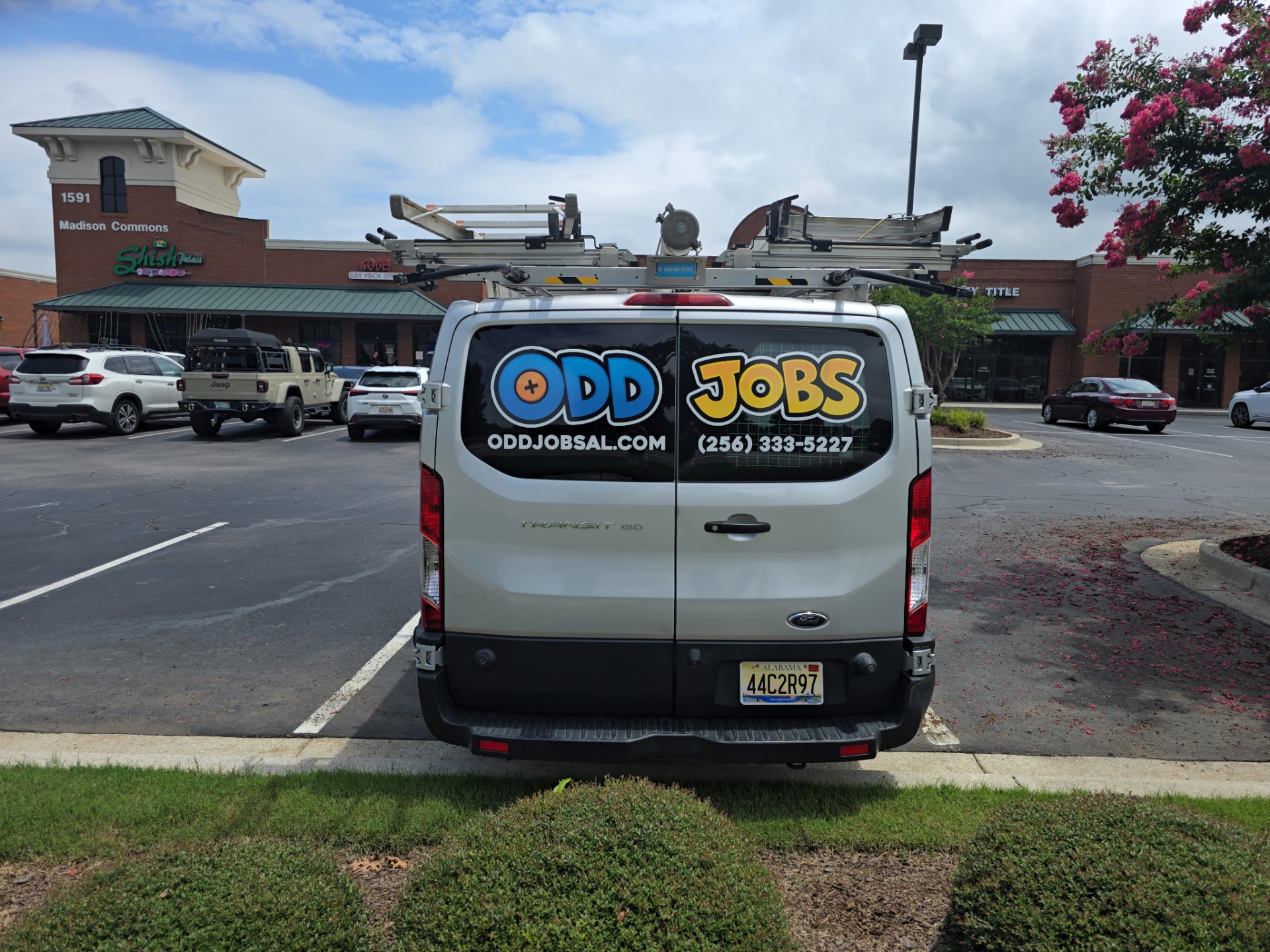
Odd Jobs handles everyday household repairs and installations across Huntsville and nearby North Alabama communities. Their handyman services cover tasks such as drywall patching, furniture assembly, door hardware replacement, and fixture installation. Homeowners with several unfinished repairs can discuss the work involved and whether the company’s half-day or full-day service packages offer a practical way to get those jobs completed.


