
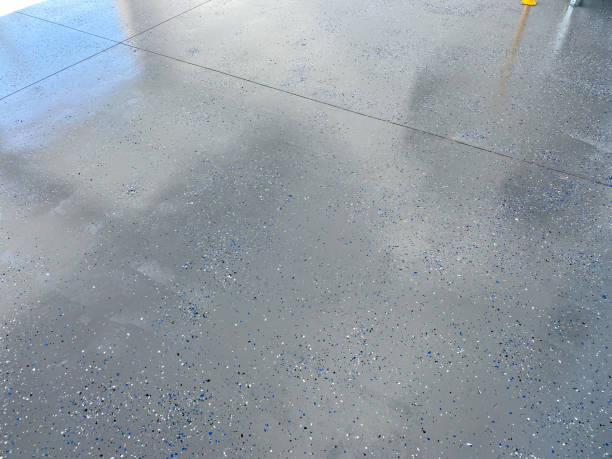
Finished floors can look perfect and still hide a weak bond underneath. Pull-off adhesion testing gives epoxy floor companies a practical way to measure how firmly a coating is attached to concrete. Results can reveal whether the weak point sits in the coating, between layers, or inside the slab itself.
What Does a Pull-Off Adhesion Test Actually Measure?
Testing measures the tensile force needed to separate a small bonded test area from the floor. Technicians attach a metal loading fixture, often called a dolly, to the coating with a strong adhesive, then use a testing device to pull straight upward until something fails. Recorded force is divided by the bonded area and reported as adhesion strength, commonly in pounds per square inch or megapascals. Because the pull is vertical, the test gives a direct look at how well the flooring system resists separation from its substrate.
How Is the Test Area Prepared Before Pulling?
Preparation starts with selecting test locations that represent the floor instead of choosing only the cleanest section. Crews may test areas near repairs, traffic lanes, joints, moisture concerns, or sections where the coating history is uncertain. Careful placement matters on commercial epoxy flooring because one large room can contain several concrete pours, old patches, and different surface conditions.
Next, the dolly is bonded to the coating and allowed to cure according to the adhesive requirements. Cutting around the fixture may also be required so the pull isolates a defined area instead of transferring force into the surrounding floor. Anyone comparing epoxy flooring near me can ask whether adhesion testing includes controlled test locations rather than random spots chosen for convenience.
Failure Location Often Matters More Than the Number
Higher readings are useful, but the place where the sample breaks can tell an installer even more. Adhesive failure between concrete and primer may point to poor preparation, contamination, moisture, or an unsuitable primer. Separation between coating layers can suggest weak intercoat adhesion or a missed recoat window. Cohesive failure inside the concrete tells a different story because the coating bond may be stronger than the slab itself. Likewise, a break inside one resin layer can indicate that the material reached its own strength limit before the bond gave way. Skilled installers read the fracture surface along with the measured value rather than treating one number as the whole answer.
Why Do Contractors Test Before a Large Installation?
Pre-installation testing can help confirm whether an existing coating, repair material, or prepared slab is suitable for the next system. Contractors may use test patches to compare primers, surface-preparation methods, or coating combinations before committing to thousands of square feet.
That approach can be especially valuable in older warehouses, service areas, and facilities with unknown floor histories.
Test Results Can Expose Problems Hidden in Concrete
Concrete that looks solid may contain weak laitance, soft patches, trapped moisture, or poorly bonded repairs. Such testing can expose those conditions because the failure may occur below the visible surface. Unexpectedly low values often lead crews to investigate grinding depth, contamination, moisture readings, or substrate strength before continuing. Homeowners searching for an epoxy garage floor near me may not need testing on every residential project, but difficult slabs can justify a closer look. Older garages with oil exposure, previous coatings, repeated peeling, or questionable patching may benefit from test areas before new epoxy flooring is installed.
How Do Installers Compare the Results?
Acceptable results depend on the coating system, concrete condition, project specification, and test method being used. Manufacturers and project documents may set minimum values, yet installers still need to note whether failure occurred at the bond line or somewhere else. Comparing several readings across the same floor can also show whether adhesion is consistent or whether one section behaves differently. Repeated testing across separate zones can reveal local weaknesses that a single sample would miss. Mapping those differences helps crews decide whether extra preparation belongs in one area or whether the entire slab needs more work before coating continues. Multiple samples provide stronger project-wide context.
Documentation becomes especially useful on commercial projects. Logged locations, pull values, coating thickness, cure age, and failure type help create a clearer picture of what happened during the test. Businesses looking at epoxy floors near me should value contractors who can explain those details in plain language instead of quoting a strength figure without context.
Testing Helps Confirm the Whole Flooring System Is Working
Adhesion testing does not replace grinding, cleaning, moisture testing, or correct application. Rather, it checks whether those earlier steps produced the bond the system was expected to achieve. Strong readings paired with the right failure mode can give installers more confidence before a floor enters heavy service. Elite Coastal Epoxy can evaluate residential and commercial concrete where adhesion concerns, older coatings, or difficult slab conditions call for closer inspection. Their team can use appropriate preparation and testing practices to help determine whether an epoxy flooring system has the sound base and layer-to-layer bond needed for dependable performance.


