
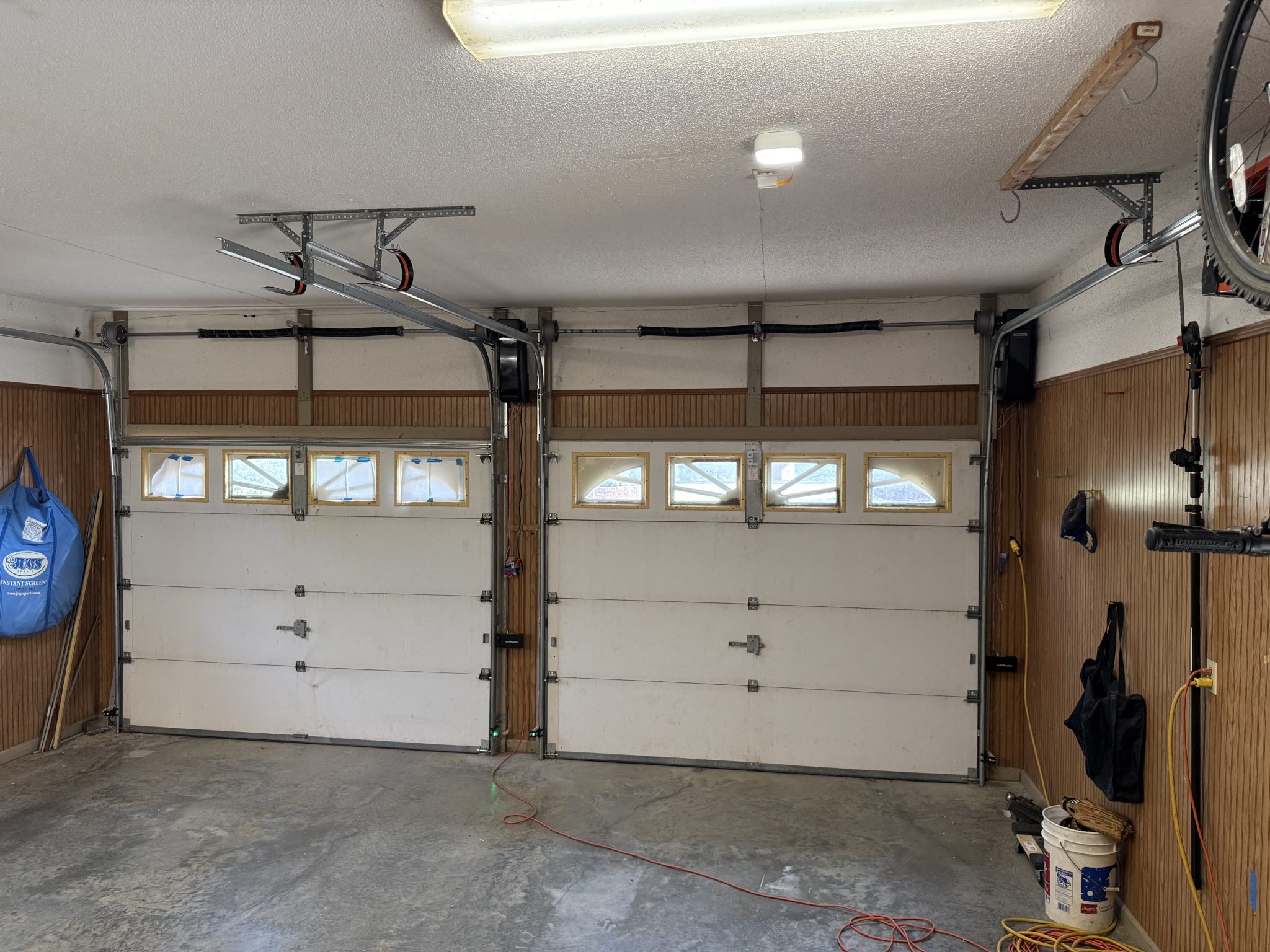
A garage door can work fine in the morning and refuse to shut that evening. It might stop a few inches from the floor, reverse without warning, or close crookedly. Those symptoms offer useful clues because several parts can interrupt its downward travel.
Why the Door Stops Just Short of the Floor
Closing problems can begin with something in the door’s path. Loose roller brackets, damaged bottom seals, or debris caught along the threshold can create enough resistance to stop an automatic opener. Changes in floor level may leave an uneven gap under the bottom seal. On sloped driveways, the seal may touch one corner first. Identifying the exact stopping point narrows the cause. Repeatedly stopping at the same height usually suggests a physical obstruction, track damage, or an incorrect close-limit setting. Unpredictable stops suggest friction, loose hardware, or an overworked opener.
Why Does a Garage Door Close and Immediately Reverse?
Automatic openers monitor resistance as the door moves. Excessive pressure against the floor can trigger the safety reversal system. An incorrectly set downward travel limit can produce the same behavior, without any obstruction. Floor-level reversals deserve a separate check of the travel settings.
Photo-eye sensors create another common problem, but their symptoms differ. Dirty lenses, misaligned sensors, or damaged wiring may prevent closing or trigger an early reversal. Flashing indicator lights may help pinpoint a sensor fault. Proper diagnosis checks both the sensors and the opener’s reversing force rather than blaming every reversal on the sensors.
A Bent Track Can Make a Straight Door Travel Crooked
Vertical tracks guide the rollers as the door rises and falls. Bent metal can pinch a roller, while loose brackets let the track shift under load. Either problem may cause jerking, scraping, or a door that hangs lower on one side. Homeowners searching for a garage door repairman near me often notice the noise before spotting the damaged track. That sound deserves attention because forcing the opener to keep running can bend hinges, dislodge rollers, or strain cables. Correcting the problem means checking track spacing and alignment along the entire path, not just at the bend.
The Springs and Cables Are Part of the Same Balancing System
Springs offset much of the door’s weight, and cables transfer force to the bottom brackets. Cables that slip off their drums can make the door descend unevenly or jam. If a cable begins to unravel, it may fail suddenly. Frayed strands and slack cables require professional attention. Unequal cable tension can also twist the door out of level.
Before replacing garage door spring components, technicians check door weight, spring size, drums, and cable routing. Correct spring sizing matters. Broken or poorly matched springs often cause opening trouble first, but imbalance can also disrupt closing. High-tension springs and cables should never be loosened by homeowners.
Opener Settings Can Be Wrong Even When the Motor Runs
The opener may sound healthy yet stop at the wrong place. Its travel controls determine the fully closed position, while force settings help detect unusual resistance. Incorrect limits can leave a gap or cause repeated reversals. Worn gears, a slipping drive mechanism, or loose trolley connections may also prevent full travel. Increasing the force to push through a jam risks damaging the door. Following garage door opener installation, technicians should set the limits and test the safety reversal system as the manufacturer directs. These checks also matter after repairs that change the door’s balance.
Installation Mistakes That Show Up Months Later
Even a new garage door may close poorly if tracks are out of square. During garage door installation, technicians verify plumb tracks, free-moving panels, and a properly seated bottom seal. Tight tracks might work initially, then bind as rollers and hinges wear. Mounting bolts that loosen can let the alignment shift over time.
Weather brings a different set of problems. Temperature shifts can affect seals and certain door materials, while moisture can swell wood or corrode hardware. Still, seasonal changes should not explain away a door that repeatedly jams or closes crookedly. Qualified technicians distinguish minor weather-related changes from poor mounting and worn hardware.
How a Proper Inspection Finds the Actual Fault
Diagnosis starts with the door itself, rather than opener adjustments. Technicians look for damaged rollers, cable slack, crooked panels, loose brackets, and track obstructions. With the system secured, they assess balance and test the opener without hiding mechanical faults. Searching for an overhead door company near me can lead homeowners to technicians who inspect the whole system instead of changing settings until the symptoms disappear. For homeowners in Northern Alabama, Snappy Doors provides garage door repair, opener service, and installation to address the cause of closing problems.


